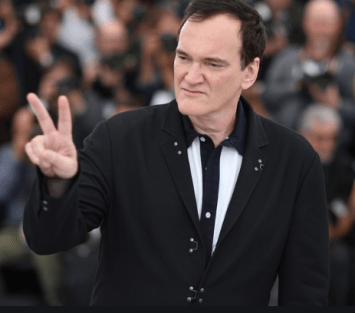
Something odd happens in Inglourious Basterds, the Quentin Tarantino film widely considered to be his most entertaining work. By the last twenty minutes of the film nearly every Jewish character is dead.
Many viewers, including viewers who view professionally, don’t seem to have noticed this. I’ve never read a take, review or critique that mentions this fact. Maybe that’s because the film gets over-bundled as it reaches its climax. There’s several sub-plots involving different characters—only some of who have ever interacted—various surprises and twists. Adding to that, the deaths are quick and somewhat ambiguous on a first viewing.
But yes, an informed roll call in subsequent viewings reveals that nearly every character identified as Jewish is dead by the last scene. One dies in the basement bar scene; two die in the penultimate Hitler/Goebbels-killing scene, leaving their suicide bomb ancklets on, inscrutably, despite the fact that the entire theater is on fire and they’ve perforated Hitler and Goebbels with 500 bullets. Shoshana’s extremely frustrating death by gunfire in the projection room is topped with her Black lover choosing to die in flames, as well, for reasons never explained. The last non-normative white character alive by the credits is Jewish American, but has literally only three lines. Brad Pitt’s white Southerner gets the last line of dialogue in the film (1).
It’s weird, right? Basterds later became a touchstone for anti-fascist memery and extremely quotable anti-white supremacist dialogue. But nearly all of that radiates from Brad Pitt’s improbable pro-Jewish, ostensibly anti-racist, Aldo Raine.
Tarantino never gives audiences much background on Raine to explain how an obviously murder-loving White Southerner with a talent for torture has gained 21st century woke sensibilities. But because the script is mostly innocuous and ideologically wholesome, many audiences gave Tarantino the benefit of the doubt on Raine, and celebrated him as a truly anti-racist, anti-supremacist protagonist. It’s nice to believe such people as Raine existed, of course. It could even be argued that Tarantino, thru Basterds, is expressing a sort of aspirational mythos that can create a heroic template for anti-racist whites. But, yeah, I doubt it, too.
What seems clearer to me is that in Basterds, Tarantino set out—perhaps subconsciously—to make a film about White American exceptionalism. That’s not surprising at all if you know his earlier work. When I watched Basterds, I strongly suspected the film was less an attempt at writing a crowd-pleasing anti-fascist fantasy than a reaffirmation of an actual fascist fantasy. Once Upon a Time in Hollywood, makes me believe I was right the first time. The new Basterds-esque film may just be an example of Tarantino publicly correcting any misconceptions about his views that Basterds may have generated.
_____________________
In Once, Tarantino follows Basterds’ alternate reality formula, perhaps seeking to create the same dynamic of wish-fulfillment heroism that made his Nazi-scalping predecessor a universal hit. There’s big differences, though that have been the subject of many critics reviews. Once is a pale shadow of Basterds. The film is unfunny, meandering and dull as dishwater and unreasonably infatuated with its own masturbatory nostalgic conceits. No one cares about the history of Red Apple cigarettes, any more than they care what Three in the Attic is about, or the fact that there used to be a tv show called FBI. The long, loving treatments of people walking from one end of their kitchen to the other also wear thin.
Then there’s the excruciating Sharon Tate arcs, which add little to the story, and after literal hours of investment, reveal absolutely nothing about her. Perhaps the only credible reason for the awkward stroll through the fictional Tate’s life is to give audiences a reason to care about her. Tate never attained lasting fame as a person or actress, and so not many present-day movie-goers would really know much about her.
Leaving the bad, self-infatuated film-making aside for a moment, it seems likely Tarantino was crafting a sympathetic victim with the detailed look into Tate, despite the fact that he failed miserably in doing so. He didn’t have to do this in Basterds, with the universal understanding of the holocaust, though he clearly would have fumbled just as much, I believe. Tarantino has created no movies of emotional resonance. His films famously sacrifice character arcs for catchy dialogue and violent archetypes in aggressive escalations. Basterds had the infamous story of Nazi butchery on its side, and didn’t have need for development of its Jewish, Nazi or Anglo heroes. Those characters move from one scene to another completely unchanged and with no variation in their motivation.
It seemed clear to me that in his Tate-arc, Tarantino was searching for the same kind of good-evil balance that fell into his lap with Nazis to shape into an equal polarity of Tate/American Hippies. For me, this actually led to one of the few genuine highlights of the film. Tarantino’s “Manson Family” is one of the closest to the documented reality of the “Family” in cinema. Though the film’s “Family” suggests once or twice that Manson is their cult-like leader, that’s not really the way Tarantino exposits the “family” nor the “commune”. Manson runs nothing in Tarantino’s vision, rather, it’s a criminal enterprise run by the Family, who have a power-structure that seems to have no need for him. Manson is a literal nobody who appears in one small cameo. No other Mansonite gets as little screen time as Manson in this Manson-murders maguffin. Even when Manson is mentioned later in the film, there’s very little doubt that it’s Tex manipulating the idea of Manson to his own ends. Whether intentionally or not, Tarantino makes a strong argument that the Manson family followed their own bliss to the murders, and that Manson had nothing to do with them. (2)
And this is where, I think, it becomes obvious that Tarantino is really just creating another version of Basterds, a morally clean vicarious foil for White American carnage. Both films can be seen as the id of violent white maleness run rampant, shielded with a noble cause as excuse—the zeitgeist of our current American civilization.
It serves Tarantino’s interests to have a more historically accurate Manson family because it’s Tarantino’s intention to paint counter-culture hippies as inherently loathsome, not the malleable ingenues of legend. Tarantino depicts the interest in communal living as disturbing, and in practice, little more than children up to shenanigans while the parents are away. Food is rotting throughout the Spahn main house–the family are dirty and disheveled, but not in a way that suggests rugged off the grid living. The group is teetering on the brink of sanity and poised to be engulfed by their own society-destroying waves of violence. And the film seems to want you to believe that’s a function of their unwholesome counter-cultural interests, not Manson’s mind powers. (3)
There’s a lot to suggest that Tarantino knows what he’s up to and this subtext dynamic is laid out deliberately. Pitt’s Cliff Booth is an extremely typical White Male Archetype of the Sixties. A war hero and unrepentant Alpha, who can’t stand the sound of Asian-American Bruce Lee’s voice. Who killed his wife, because he couldn’t stand the sound of her voice, either. Tarantino definitely wants us to know that though Booth is staying clear of authorities and complete social sanction with the bare fig leaf that this is a rumor, it’s definitely not a rumor. Even if the flashback scene could be explained away as a fantasy, Dalton’s reaction to being confronted with the act—an uncomfortable gulp and retort “he’s a war hero”—leave nothing left to answer. Moreover, the absolute anti-woman loathing in the portrayal of Booth’s spouse is relentless and unmistakable, and as I said, it bears quite a resemblance to Booth’s reaction to the voice of Bruce Lee.
There are other painfully obvious metaphors in the film to portray the societal straight vs hippie dynamic as a clash of civilizations akin to Basterds’ Nazis v. Jewish-Protecting Americans. The hippy invasion of the ranch where Dalton and Booth worked during their golden years heyday, is one; the hippy invasion of the private road where Dalton and Tate live is another. Dalton’s hateful screed during that scene against both hippies and poverty can’t be dismissed. And I’ll give Tarantino enough credit to know what he’s doing here, because ever-larger portions of the film, especially as they approach the hippie-slaughtering apogee, are narrated by an artifact from another Tarantino film, Deathproof. Kurt Russels’ Randy is an unmistakable nod to the ex-stuntman misogynist serial killer he played in the Grindhouse vignette and the character is even married to one of the stunt-woman actresses from that film. (4)
The sick, joyful romp through disfiguring torture and violence, aimed mostly at women in Once’s climax, it should be noted, recalls the grisly torture that Pitt subjected Nazis to in Basterds. The audience can’t be blamed for being seduced by the grisly violence in that film—who could imagine a more deserving villain for the Hollywood super-violence that has few vessels as perfectly matched as Pitt or interpreters more dedicated than Tarantino.
But there’s a lot to suggest in Once that Tarantino’s main goal in Basterds was sanitizing the ugly white supremacist thread that he’s become famous for. Tarantino has made an entire living from creating extremely violent, psychotic protagonists who hate the non-white, non-male world. And even when he’s followed the exploits of subaltern characters—Jackie Brown, Kill Bill, Django—they spend much of their arc fighting other people experiencing the same oppression that set them on a revenge quest. Brown is killing and betraying Black friends; the Bride spends much of the films killing all the other women who work for the man who tried to kill her; Django expresses constant disrespect for Tarantino’s 2-dimensionally elaborated Black slaves, and refers to himself as a superior kind of Black male. (5)
That Americans love violent films is definitely attested to by the audience I saw the film with, who gave a standing ovation when the final Manson hippie is roasted in the pool. For my tastes, that fixation with cinematic carnage and violence isn’t ideal, and I left the film feeling less entertained than uneasy about the people in the parking lot. But Tarantino’s film goes a level deeper, serving the violence up with a disguised form of supremacy that’s far deeper than his obvious fixation with the N-word and that leaves a viewer more uncomfortable with those enjoying the film than the film-maker.
___________________________
- It would be hard to argue that any of the other Jewish characters in the film survive besides the “little man”. But if it were the case, it would be even more significant that Raine took no precautions to ensure the lives of his comrades, though he had plenty of time and some collateral to do that with.
- The amount of evidence that the Manson Family were self-directing and horizontal in their violence is extraordinary when compared to how little there is to argue that Manson had mind-powers or personal magnetism. The scene in Basterds where Tex browbeats the others into accepting that they are doing Manson’s work, itself, may be an actual reference to the courtroom performances of the accused killers, who were coerced into arguing that Manson gave them direct orders about the killings. This essay in the Southwestern Law Review is the most convincing, well-documented thing I’ve read on Manson and it’s well worth reading in its entirety.
- First hand accounts by participants paint the “Family” more as a gang than a commune. They spent most of their time in small-time criminal pursuits such as burglary, short cons, prostitution and drug dealing. It’s illustrative that Tarantino eliminated these pursuits to pose them in a more popular vein of “hippie” commune, with an ethic, ideology and heirarchical cult structure, rather than sociopaths coming together as they sometimes do. The discourse in the car that points their murderous endeavor at Dalton instead of the Tate house, is extremely ideological–but it’s not at all clear anything like those conversations was ever happening at Spahn ranch. Tarantino wants Hippies doing the deed here, not psychotic drop-outs, and he dresses their dialogue accordingly.
- Kurt Russel’s narration and his apparent reincarnation as Stuntman Mike from Deathproof could be seen here as masturbatory self-reference by Tarantino, and there’s definitely enough evidence to suggest that within the film–the Red Apple cigarrettes commercial a prime example. But it’s difficult to see the link between the woman-targeting serial killer in another Tarantino film narrating this film about a hero known for killing his wife as something other than Tarantino’s own violent misogyny. It’s an actual eye-brow raising moment when Tarantino deliberately makes this meta-connection between Russel and Cliff Booth on the topic of murdering a woman. Given the casting choices, Tarantino did not want you to miss it, that’s clear.
- The racist idea that only one out thousands of Black people are extraordinary is posited by white supremacists throughout Django. But by the end of the film, Django has accepted the premise about himself, and treats other Black people accordingly.
 Hyphenated-Republic
Posted on August 13, 2019
0